
Quick Answer: Before prenatal yoga classes, eat a light, easily digestible snack 60–90 minutes before your session—think a banana, whole grain toast, or a handful of nuts. After class, focus on rehydrating and eating a balanced meal with protein, whole grains, and fresh fruit. Every pregnancy is different, so always consult a qualified prenatal expert for personalized nutrition guidance.
Prenatal yoga helps expecting mothers stay active, improve flexibility, and prepare both body and mind for childbirth. However, what you eat before and after your Prenatal Yoga Classes can also influence your comfort, energy levels, and overall pregnancy wellness. Understanding a few simple nutrition guidelines can help you make the most of every yoga session while supporting a healthy pregnancy.
Many expecting mothers focus on what poses to practice or how often to attend pregnancy yoga classes—but nutrition is just as important. Eating too much before a session can leave you feeling sluggish or nauseous. Eating too little can make you lightheaded or fatigued. Getting the balance right helps you stay energized, comfortable, and safe throughout your prenatal fitness routine.
This blog post covers general, evidence-informed guidance on pre- and post-yoga nutrition during pregnancy. It is not a personalized diet plan. Every pregnancy is unique, and nutritional needs vary depending on your trimester, health conditions, and your healthcare provider’s recommendations.
Why Does Nutrition Matter as Much as Prenatal Yoga?

Pregnancy places significant demands on your body. Your energy needs increase. Your digestive system becomes more sensitive. And your growing baby depends on the nutrients you consume every day.
When you combine pregnancy yoga classes with smart eating habits, the benefits multiply. Good nutrition:
- Supports fetal development at every stage
- Helps maintain steady energy during prenatal exercise
- Aids muscle recovery after yoga sessions
- Reduces common discomforts like nausea, bloating, and fatigue
- Contributes to overall pregnancy wellness
According to the World Health Organization (WHO), adequate nutrition during pregnancy is essential for both maternal health and healthy fetal growth. That said, what “adequate” looks like differs from one mother to the next. This is exactly why personalized guidance from qualified prenatal professionals matters so much.
What Should You Eat Before Prenatal Yoga Classes?
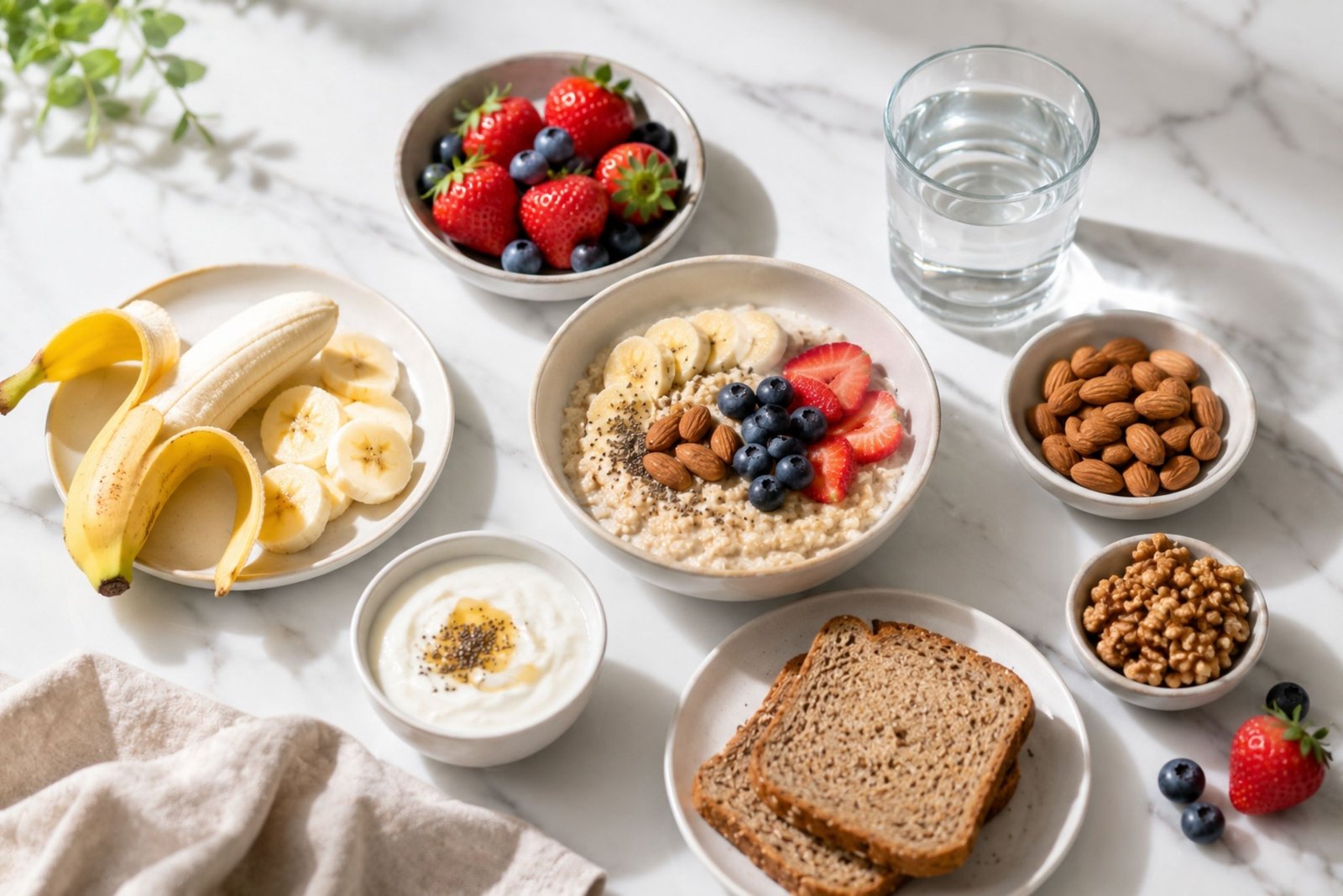
Timing and food choice both matter before a yoga session. You want enough fuel to feel energized—but not so much that you feel heavy or uncomfortable during movement and breathwork.
General guidelines for pre-yoga eating:
- Eat a light snack or small meal about 60–90 minutes before class
- Choose easily digestible foods that won’t sit heavily in your stomach
- Avoid large, greasy, or spicy meals right before yoga
- Listen to your body—if you feel full, wait a little longer before attending class
Examples of gentle pre-yoga snacks (general guidance only):
- A ripe banana
- Whole grain toast with a thin spread
- A small bowl of oatmeal
- A handful of nuts and dried fruit
- Plain yogurt with a small portion of fruit
These options provide a steady release of energy without overwhelming your digestive system. For women experiencing morning sickness, even small crackers or dry toast may help settle the stomach before class.
Before Prenatal Yoga — Quick Reference Table
What to Try | Why It May Help |
Light snack 60–90 min before class | Provides energy without causing discomfort |
| Easily digestible carbohydrates | Offers quick, gentle fuel for movement |
Small amount of protein | Supports muscle function and sustained energy |
| A glass of water before class | Prevents dehydration during gentle exercise |
| Avoid heavy or fatty foods | Reduces risk of nausea, bloating, or reflux |
Which Foods May Make Your Yoga Session Uncomfortable?
Some foods are best avoided in the hours before yoga during pregnancy. Even nutritious foods can cause discomfort if eaten at the wrong time.

Foods to approach with caution before class:
- Heavy, oily meals — These take longer to digest and may cause sluggishness
- Carbonated drinks — Can lead to bloating and gas during floor-based poses
- Spicy foods — May trigger heartburn or acid reflux, which is already common in pregnancy
- Large portions — Even healthy food in excess can make movement uncomfortable
- Caffeinated beverages — Moderation is generally advised during pregnancy; discuss with your doctor
Every woman’s body responds differently. Some expecting mothers find that even a small snack causes nausea, while others feel faint without eating beforehand. There is no universal rule—which is why tuning into your own body and seeking personalized advice is so important.
What Should You Eat After Prenatal Yoga Classes?
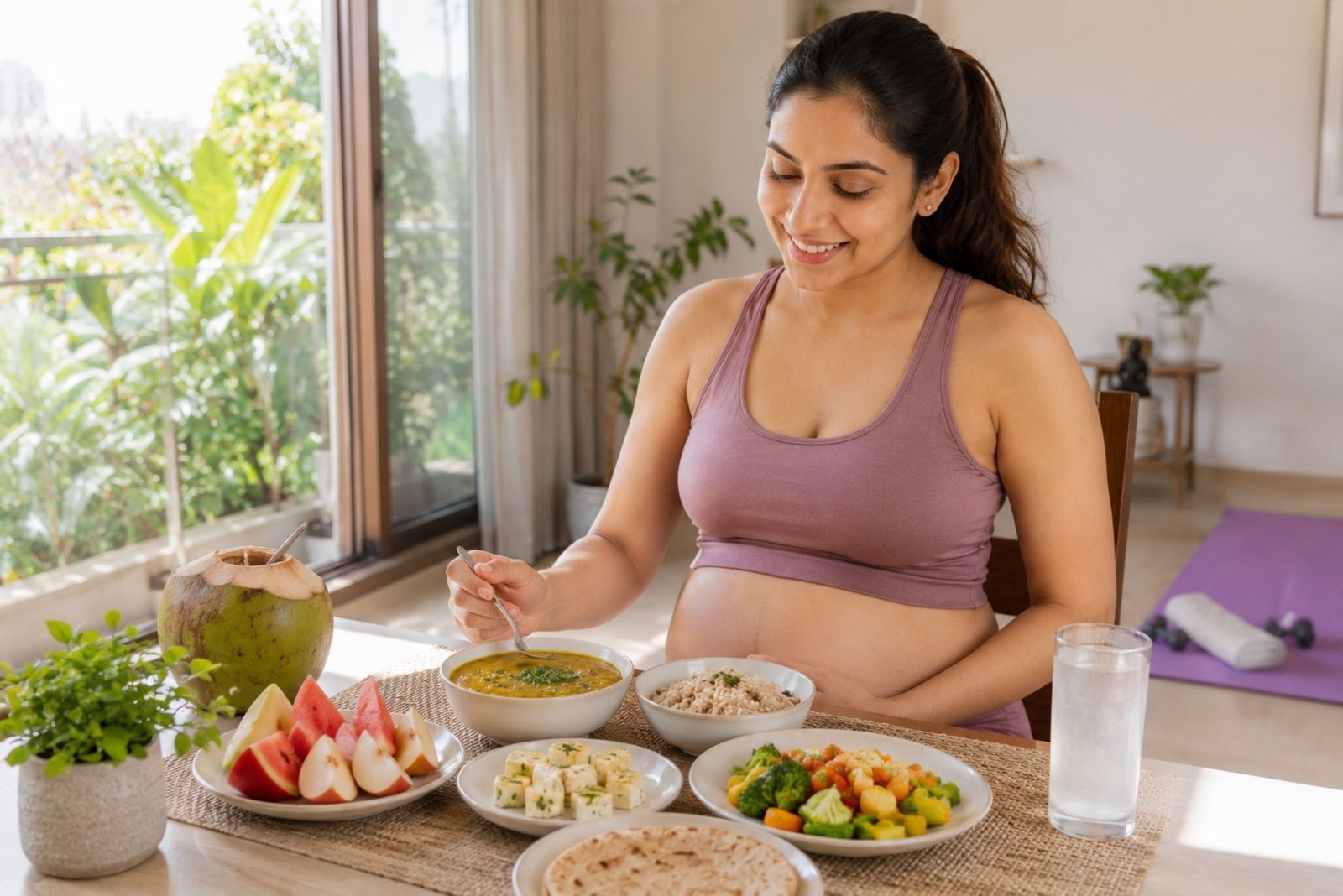
After a yoga session, your body needs to replenish fluids, restore energy, and support muscle recovery. Post-yoga nutrition does not need to be complicated—but it should be nourishing.
General post-yoga nutrition principles:
- Rehydrate first — Drink water steadily after class
- Eat within 30–60 minutes if you feel hungry
- Include a source of protein to support muscle repair
- Add whole grains or complex carbohydrates for sustained energy
- Include fruits or vegetables for vitamins, minerals, and hydration
After Prenatal Yoga — Quick Reference Table
What to Try | Why It Matters |
Water or coconut water | Replenishes fluids lost during movement |
Protein-rich foods (e.g., dal, paneer, eggs, legumes) | Supports muscle recovery and fetal growth |
Whole grains (e.g., brown rice, roti, oats) | Restores energy levels gradually |
| Fresh fruits (e.g., papaya, apple, watermelon) | Provides vitamins and natural hydration |
Light, balanced meal | Nourishes both mother and baby without overloading digestion |
| Rest after eating | Aids digestion and supports overall recovery |
Note: Food choices should align with your personal health condition, stage of pregnancy, and any dietary restrictions advised by your doctor or nutritionist.
Hydration Tips for Pregnant Women Attending Yoga Classes

Hydration is one of the most important—and most overlooked—aspects of pregnancy wellness. Your blood volume increases significantly during pregnancy, and your body needs more water to support this change.
Practical hydration guidance:
- Drink water throughout the day, not just around yoga sessions
- Sip water before, during, and after prenatal yoga classes
- Monitor urine color—pale yellow generally indicates good hydration
- In warm weather or heated spaces, increase fluid intake
- If plain water feels unappealing (common during pregnancy), try adding a slice of lemon or cucumber
Avoid sugary sports drinks or packaged juices as primary hydration sources. Whole fruit and homemade nimbu pani (with minimal sugar) can be gentle, nourishing options. Always discuss fluid intake with your healthcare provider if you have any concerns.
Healthy Nutrition Checklist Before and After Prenatal Yoga Classes
Use this checklist as a simple reference to support your pre- and post-yoga routine:
✔ Eat a light meal or snack 60–90 minutes before class
✔ Choose easily digestible, nutrient-rich foods
✔ Avoid heavy, spicy, or greasy foods before yoga
✔ Stay hydrated throughout the day
✔ Drink water before, during, and after your session
✔ Eat a balanced meal after yoga to aid recovery
✔ Include protein, whole grains, and fresh fruit post-class
✔ Avoid overeating before or after sessions
✔ Listen to your body’s hunger and fullness cues
✔ Consult a qualified prenatal professional for personalized nutrition advice
Common Pregnancy Nutrition Mistakes to Avoid
Even well-intentioned expecting mothers can fall into some common nutritional traps. Here are a few to be mindful of:
- Skipping meals to manage weight
Restricting food during pregnancy can affect both your energy and your baby’s development. Focus on quality rather than quantity. - Eating for two from the first trimester
Caloric needs do increase during pregnancy—but not dramatically in the first trimester. Significant increases generally apply later in pregnancy, and the exact amount varies per individual. - Relying on processed or packaged snacks
While convenient, many packaged snacks contain excess salt, sugar, and preservatives. Whole food options are generally a better choice. - Ignoring food safety
Certain foods carry a higher risk of foodborne illness during pregnancy. Raw or undercooked meats, unpasteurized cheeses, and unwashed produce require extra caution. - Following generic diet plans from the internet
A diet that worked for your friend, relative, or favorite Instagram account may not suit your specific health profile. Pregnancy nutrition is deeply personal.
Why Every Pregnancy Needs Personalized Nutritional Guidance
No two pregnancies are identical. Nutritional requirements during pregnancy depend on a wide range of individual factors, including:
- Trimester and stage of pregnancy — Needs evolve as the baby grows
- Pre-existing health conditions — Such as gestational diabetes, thyroid disorders, or anemia
- Body weight and BMI — Influences energy and nutrient recommendations
- Dietary preferences and restrictions — Including vegetarian, vegan, or specific religious dietary practices
- Physical activity levels — Including how often you attend pregnancy yoga classes
- Medical history and medications — Which may affect how certain nutrients are absorbed
This is why general nutritional information—however well-researched—cannot replace personalized guidance from a qualified prenatal professional. A certified nutrition expert or obstetrician can assess your specific circumstances and help you make safe, informed choices.
How Birth and Beyond Supports Your Healthy Pregnancy Journey

Birth and Beyond is a trusted prenatal wellness centre offering Prenatal Yoga Classes in Chandigarh and Panchkula. Their experienced instructors specialize in adapting yoga sessions to each stage of pregnancy—supporting physical strength, flexibility, mental calm, and birth preparation.
Beyond yoga, Birth and Beyond’s comprehensive pregnancy wellness programs are designed to guide expecting mothers through every aspect of prenatal health—from movement and breathwork to understanding what supports a healthy pregnancy. Their approach recognizes that every mother’s journey is unique, which is reflected in how their classes are structured and supported.
Whether you are a first-time mother or preparing for your second or third birth, their team offers a nurturing, expert-guided environment to support you throughout your pregnancy. To enquire about Pregnancy Yoga Classes or upcoming programs, reach out to Birth and Beyond directly and take the first step toward a more supported prenatal experience.
Class timings at Birth and Beyond:
- Chandigarh: Tuesday, Thursday, Saturday — 10:30 AM to 11:30 AM | Monday to Friday — 6:00 PM to 7:00 PM
- Panchkula: Monday to Friday — 11:00 AM to 12:00 PM
📍 Chandigarh: H.No. 149, Sector 28A, Chandigarh — 📞 +91-9814807988
Finding Birth and Beyond on Google
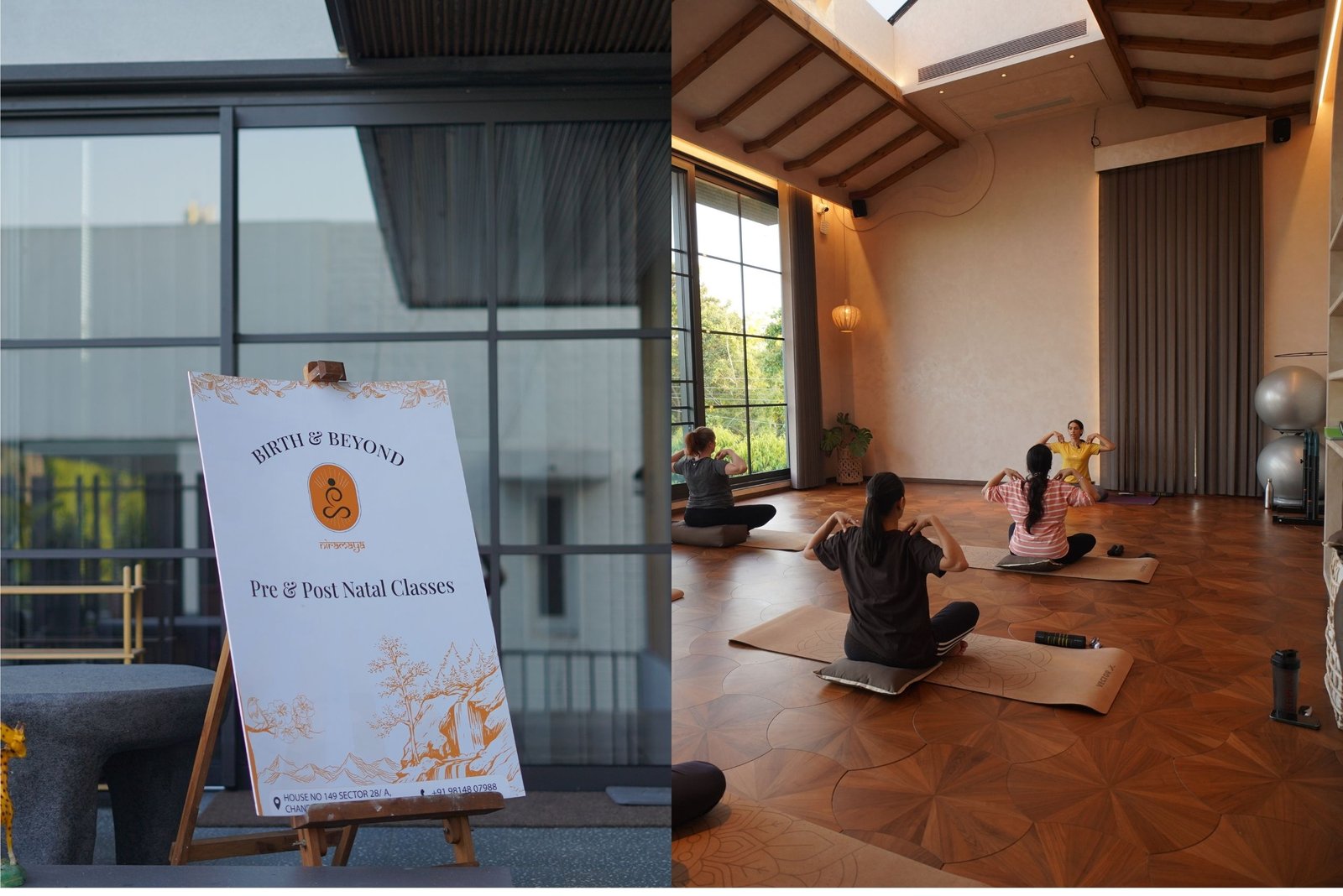
Many expecting mothers searching for Prenatal Yoga Classes in Chandigarh check Google ratings and patient reviews before choosing a prenatal wellness centre. Birth and Beyond’s Google Business Profile features genuine reviews from mothers who have attended their programs, along with clinic photos, ratings, directions, and contact details. Visiting their profile is a helpful first step for anyone wanting to learn more about the classes, read real experiences from other expecting mothers, and enquire about availability before booking.
Take the Next Step in Your Pregnancy Wellness Journey
Good nutrition and regular prenatal yoga classes work best when they complement each other. Neither replaces the other—and both benefit enormously from professional guidance tailored to your unique pregnancy.
A few thoughtful food choices before and after each yoga session can make a real difference to how you feel. But beyond general guidance, your body—and your baby—deserve care that is designed specifically for you.
If you are looking for expert-led Prenatal Yoga Classes in Chandigarh or Panchkula, Birth and Beyond offers weekly sessions in a supportive, safe, and nurturing environment. Their experienced instructors are committed to helping every expecting mother feel empowered, prepared, and well supported throughout pregnancy.
📩 Contact Birth and Beyond today to enquire about upcoming Prenatal Yoga Classes and pregnancy wellness programs.
Frequently Asked Questions (FAQs)
What should I eat before Prenatal Yoga Classes to avoid nausea?
Choose light, easily digestible foods such as a banana, plain toast, or a small bowl of oatmeal. Eat 60–90 minutes before class and avoid greasy, spicy, or heavy meals. If nausea is persistent, consult your healthcare provider for personalized advice.
Is it safe to attend pregnancy yoga classes on an empty stomach?
Attending yoga during pregnancy on a completely empty stomach is generally not recommended. Low blood sugar can cause lightheadedness or fatigue. A small, gentle snack before class helps maintain energy and keeps you comfortable throughout the session.
How much water should I drink during prenatal exercise?
There is no single amount that applies to every pregnant woman. A general guideline is to sip water before, during, and after exercise, and to monitor urine color as a hydration indicator. Your doctor can advise on the right intake for your specific needs.
Can nutrition affect the benefits I get from Prenatal Yoga Classes?
Yes. What you eat before and after yoga can influence your energy, comfort, and recovery. Nourishing your body appropriately helps you get more from each session and supports your overall pregnancy health. Pairing regular classes with balanced eating habits is a valuable part of prenatal self-care.