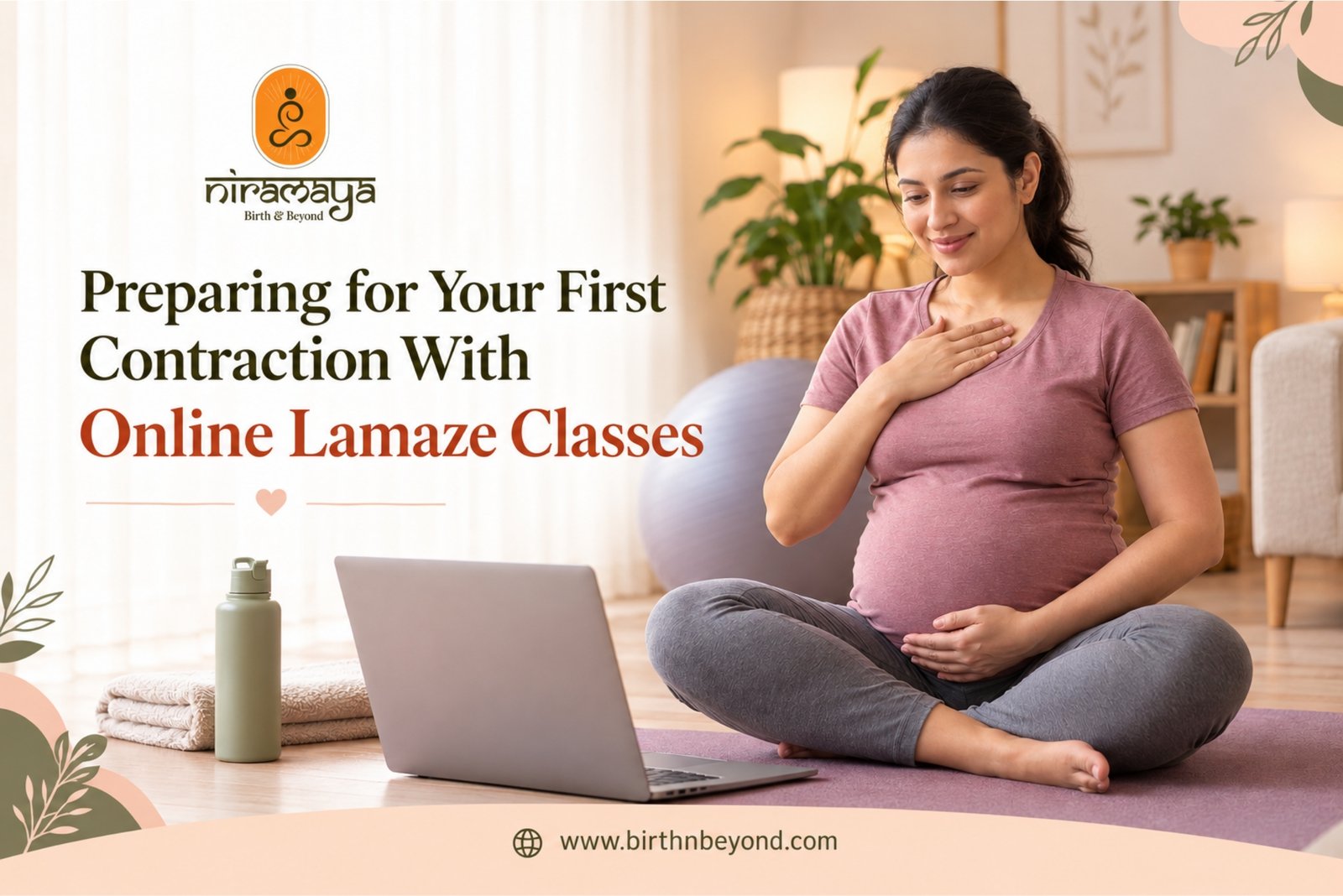
The first contraction often feels like mild, period-like cramping or lower back tightness that comes and goes. Learning what to expect, along with breathing and relaxation techniques, can make early labour feel far less unfamiliar. Online Lamaze classes teach these skills from home, helping first-time mothers and their partners approach labour with greater confidence and calm.
Waiting for that first contraction is one of the most uncertain parts of pregnancy for first-time mothers. Will it feel like a sharp pain or a dull ache? Will you know it’s really labour, or just another pregnancy twinge? These questions are completely normal, and most expecting parents share them.
The good news is that uncertainty tends to shrink with knowledge. Understanding how contractions typically start, how they differ from other pregnancy discomforts, and how to manage them with breathing and relaxation can turn a stressful unknown into something far more manageable. This is exactly where childbirth education comes in.
For many expecting parents in India today, especially those balancing busy schedules or living away from extended family support, online Lamaze classes offer a practical way to learn these skills without stepping outside their home. This guide walks through what the first contraction may feel like, how to recognise genuine labour, and how online Lamaze classes can help you and your partner prepare for one of life’s biggest moments.
What Does Your First Contraction Feel Like?
There’s no single, universal way to describe a first contraction. For some women, it begins as a mild, dull ache in the lower back. For others, it feels more like menstrual cramps, a tightening sensation across the belly, or pressure that builds and then fades.
Early contractions are usually irregular and relatively mild compared to what comes later in labour. They may last around 30 to 45 seconds, with longer gaps in between, giving the body time to rest. As labour progresses, contractions generally become longer, closer together, and more intense.
It’s worth remembering that every pregnancy is different. Some women notice contractions gradually building over hours, while others experience a more sudden onset. Factors such as individual pain tolerance, baby’s position, and whether it’s a first or subsequent pregnancy can all influence how contractions feel. This is one reason childbirth educators encourage expecting mothers to learn general patterns rather than expecting one fixed experience.
How Can You Tell If It Is a Labour Contraction?
Not every tightening sensation in pregnancy signals the start of labour. Braxton Hicks contractions, sometimes called “practice contractions,” can occur from the second trimester onward. They tend to be irregular, don’t increase in intensity, and often ease up with rest, hydration, or a change in position.
True labour contractions, on the other hand, usually follow a more consistent pattern. They tend to grow stronger, last longer, and occur at increasingly regular intervals over time. Other signs that may accompany real labour include a show of mucus, your water breaking, or persistent lower back pain that doesn’t go away with rest.
That said, distinguishing between the two isn’t always straightforward, especially for first-time mothers. If you’re ever unsure whether what you’re feeling is early labour or something else, it’s important to contact your obstetrician or midwife rather than guess. Medical professionals can assess your specific situation and guide you on the right next steps.
Why Preparing for Your First Contraction Matters
Childbirth is unpredictable in its timing, but preparation can still make a meaningful difference in how it’s experienced. Understanding the stages of labour in advance helps replace fear of the unknown with a sense of familiarity.
Preparation offers several practical benefits for expecting parents:
- A clearer understanding of how labour typically progresses, from early contractions to active labour and delivery
- Reduced anxiety, since familiar sensations are easier to process than unexpected ones
- Practical breathing and relaxation skills that can be practised well before the due date
- Greater confidence in recognising when it’s time to contact a healthcare provider
- Stronger communication between partners, since both understand what’s happening and how to respond
This is the foundation that childbirth education, including Lamaze-based learning, is built on: replacing uncertainty with informed calm.
How Online Lamaze Classes Can Prepare You for Labour
Online Lamaze classes are designed to help expecting parents build practical skills for labour and birth, all from the comfort of home. Rather than focusing on a single “correct” way to give birth, Lamaze education centres on helping parents understand their options and make informed choices.
Typically, online Lamaze classes cover:
- Breathing patterns that support relaxation during contractions
- Techniques to ease physical tension and discomfort
- A range of labour positions and movement options
- Comfort measures that partners can use for support
- An overview of how labour generally progresses through its stages
- Emotional and mental preparation for the birthing experience
- Practical guidance on what to expect in the hours leading up to delivery
It’s important to set realistic expectations here. Online Lamaze classes are not designed to guarantee a painless labour, a natural delivery, or a shorter birthing process. Instead, they aim to equip parents with knowledge and coping tools, helping them feel more prepared and in control of the experience, whatever direction it takes.
Breathing Techniques to Practise Before Labour
One of the most valued elements of Lamaze education is focused breathing. Practising these techniques during pregnancy, well before labour begins, allows the body and mind to become familiar with them, so they feel more natural when needed.
Focused breathing generally involves slow, controlled inhales and exhales that help redirect attention away from discomfort and toward a steady rhythm. Many classes also introduce patterned breathing, where the rhythm shifts slightly as contractions intensify.
These techniques work best with repetition. Practising for a few minutes several times a week during the later stages of pregnancy can help the techniques feel more instinctive when labour actually begins. This is an educational skill, not a medical treatment, so it should complement, not replace, guidance from your healthcare provider.
How Your Birth Partner Can Support You During Contractions
Labour isn’t just an experience for the mother. It’s also a significant moment for her partner, who often wants to help but isn’t always sure how. Online Lamaze classes are designed with this in mind, actively involving partners in the learning process.
A well-prepared birth partner can offer meaningful support by:
- Practising breathing techniques alongside the mother during pregnancy
- Offering physical comfort, such as massage or helping with position changes
- Staying calm and reassuring during contractions
- Helping track contraction timing and patterns
- Communicating clearly with doctors or midwives when needed
When both partners attend online Lamaze classes together, they build a shared understanding of the process. This teamwork often makes the experience feel less isolating for the mother and more purposeful for her partner.
What Should You Learn Before Your First Contraction?
Preparing for labour involves more than just understanding contractions. The table below summarises key areas worth focusing on during pregnancy.
Preparation Area |
What to Learn |
Why It Matters |
|
Contractions |
Signs and stages of labour | Helps reduce uncertainty |
| Breathing | Focused breathing techniques |
Supports relaxation |
|
Positions |
Comfortable labour positions | Helps parents understand available options |
| Partner Support | Ways to provide physical and emotional support |
Creates better teamwork |
|
Labour Stages |
What may happen during labour |
Builds realistic expectations |
| Hospital Preparation | When and how to seek professional guidance |
Supports timely decision-making |
Covering these areas before your due date can make the entire labour experience feel more structured and less overwhelming.
Are Online Lamaze Classes Suitable for First-Time Mothers?
Yes, online Lamaze classes are generally well suited to first-time mothers, particularly those who want to learn labour preparation techniques without the time or travel demands of in-person sessions. Online formats allow expecting parents to revisit material, learn at their own pace, and involve their partner more easily.
That said, the real value of any online Lamaze class depends on a few key factors: the quality of instruction, the depth of the curriculum, and how well it’s tailored to individual pregnancy needs. A well-structured class led by an experienced, certified instructor will generally offer far more practical value than generic online content. First-time mothers are encouraged to look for programs that combine clear information with interactive guidance, rather than passive video-only formats.
When Should You Take an Online Lamaze Class?
There’s no single rigid deadline for starting online Lamaze classes, but many expecting parents find it helpful to begin sometime in the third trimester, when they have more time to practise the techniques they learn before labour begins. Starting earlier is also perfectly reasonable, especially for parents who prefer a more gradual learning pace.
Ultimately, the right timing depends on individual circumstances, including your overall health, pregnancy progress, and schedule. It’s always worth discussing your plans for childbirth education with your obstetrician or midwife, who can offer guidance specific to your pregnancy.
How Birth and Beyond Can Support Your Pregnancy and Birth Preparation
Birth and Beyond offers childbirth and parenting education designed to help expecting mothers and their partners feel genuinely prepared for labour and beyond. Their Birth and Parenting programs go beyond simply explaining the birthing process; they focus on building confidence, informed decision-making, and practical coping skills for labour.
Through structured sessions, including Lamaze-based learning, Birth and Beyond helps parents understand what to expect at each stage of labour while developing breathing, relaxation, and comfort techniques they can rely on. Testimonials from parents who’ve attended these sessions often highlight how much calmer and more prepared they felt walking into the delivery room, with partners noting that the training gave them a clear, active role in supporting their partner through contractions.
If you’re exploring pregnancy classes, Lamaze classes, or broader childbirth classes in Chandigarh or Panchkula, Birth and Beyond’s Google Business Profile offers a convenient way to learn more about their antenatal classes and overall approach to birth preparation. It’s a useful starting point for comparing program details and understanding what each class offers before making a decision.
Moving Forward With Confidence
The first contraction doesn’t have to be a leap into the unknown. With a clear understanding of what early labour may feel like, how to recognise genuine contractions, and how to use breathing and relaxation techniques, first-time mothers and their partners can approach labour with far more confidence.
Online Lamaze classes offer a practical, accessible way to build this knowledge from home, at a pace that fits your pregnancy and schedule. While no class can predict exactly how your labour will unfold, the right preparation can help you feel more informed, supported, and ready for whatever the day brings.
If you’re ready to start preparing, consider reaching out to Birth and Beyond to learn more about their pregnancy and birth-preparation programs, including online Lamaze classes tailored to first-time parents. A short conversation with their team can help you understand which program best fits your needs and timeline. Contact Birth and Beyond today to take the next step in your childbirth preparation journey.
Frequently Asked Questions
What does the first labour contraction usually feel like?
Many women describe it as a dull ache in the lower back or a cramping sensation similar to menstrual pain. It can also feel like a tightening across the belly that builds and then eases. Experiences vary widely from person to person.
Can online Lamaze classes help first-time mothers prepare for labour?
Yes. Online Lamaze classes teach breathing techniques, relaxation methods, and practical knowledge about labour stages, all of which can help first-time mothers feel more informed and less anxious as they approach their due date.
What breathing techniques are taught in Lamaze classes?
Lamaze classes typically teach slow, controlled breathing patterns designed to promote relaxation, along with patterned breathing techniques that adjust as contractions intensify. These are practised during pregnancy so they feel more familiar during labour.
When should I consider taking an online Lamaze class?
Many parents start during the third trimester, though beginning earlier is also common. The right timing depends on your individual pregnancy, so it’s worth discussing with your healthcare provider.