Quick answer: Pregnancy often brings heavy legs, tight hips, and back discomfort due to weight gain, postural shifts, and reduced movement. Pregnancy Yoga Classes address these concerns by prioritizing gentle mobility—rather than deep stretching or advanced poses—to support comfortable movement throughout each trimester. Always consult a healthcare provider before starting any prenatal exercise routine.
Pregnancy changes the body in ways that go far beyond a growing belly. Many expecting mothers notice their legs feel heavier by the end of the day, their hips seem to lose their usual ease of movement, and their lower back aches after simple tasks like standing at the kitchen counter or bending to pick something up. These sensations are common, and they often stem from the natural physical adjustments the body makes to support pregnancy.
For many women, this is where Pregnancy Yoga Classes come in. Rather than focusing on flexibility or intensity, well-designed prenatal yoga sessions center on mobility—helping the body move through its changing shape with greater ease and comfort. This article explains why heavy legs, tight hips, and back discomfort tend to occur during pregnancy, and why mobility, rather than stretching or strength alone, has become such a central focus of pregnancy yoga.
Why Pregnancy Can Make the Body Feel Less Mobile
As pregnancy progresses, the body undergoes a series of physical adjustments that can affect how a woman moves and feels throughout the day. The growing belly shifts the body’s center of gravity forward, which often changes posture and the way weight is distributed through the hips, spine, and legs.
These postural changes, combined with the increased physical load of pregnancy, can make certain positions—like sitting for long stretches or standing for extended periods—less comfortable than before. Many women also notice that everyday movements, such as getting up from a chair or turning over in bed, require more effort. This is a normal part of pregnancy, though the degree varies from person to person.
Why Legs May Feel Heavy During Pregnancy
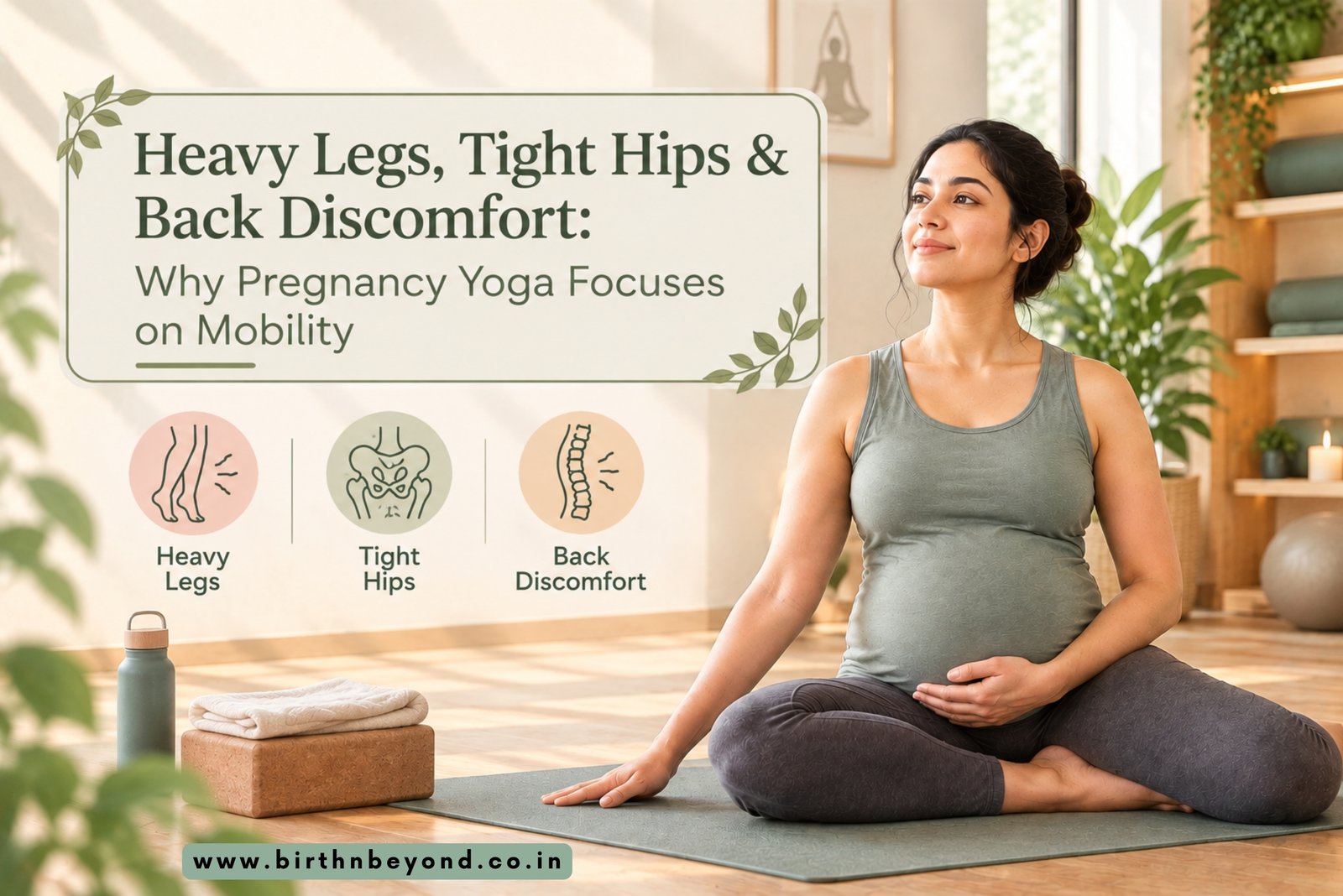
Heavy or tired legs are a frequently reported experience during pregnancy. Several general factors may contribute to this sensation:
- Increased body weight, which places additional demand on the legs during standing and walking
- Reduced overall movement, particularly later in pregnancy
- Changes in circulation as the body accommodates a growing uterus
- Prolonged sitting or standing, common in many daily routines
- The general physical demands that come with carrying additional weight
While heavy legs are often a normal part of pregnancy, persistent, severe, sudden, or unusual leg symptoms—such as significant swelling, pain, or redness—should always be discussed with a qualified healthcare professional. Pregnancy yoga is not a treatment for medical conditions, and any concerning symptoms deserve proper medical attention.
Why Hips Can Feel Tight During Pregnancy
Hip tightness is another common experience, particularly as pregnancy advances. Postural changes often shift how weight moves through the pelvis, which can affect the surrounding muscles and reduce the hips’ natural range of motion.
Sitting for long periods, reduced daily activity, and the increased physical demands of pregnancy can further contribute to this tightness. Because the hips play such a central role in everyday movement—walking, sitting, standing, and changing positions—many women find that gentle, pregnancy-appropriate mobility work helps support more comfortable movement as the body adapts.
Understanding Back Discomfort During Pregnancy
Back discomfort is one of the most frequently discussed pregnancy concerns, and it often relates closely to the postural shifts mentioned earlier. As the belly grows, the lower back frequently takes on additional load to help maintain balance. This, combined with reduced core and hip mobility, can lead to stiffness or discomfort, particularly after prolonged sitting or standing.
It’s worth noting that pregnancy yoga is not a guaranteed solution for back pain, and outcomes vary between individuals. It’s important to distinguish between the common, mild discomfort many women experience and symptoms that warrant medical attention—such as sharp, severe, or persistent pain, which should always be evaluated by a healthcare provider.
Why Pregnancy Yoga Focuses on Mobility
This is where mobility becomes central to the practice. Unlike general yoga, which may emphasize flexibility or advanced postures, Pregnancy Yoga Classes typically prioritize comfortable, functional movement over achieving deep stretches or difficult poses.
Suitable prenatal yoga practices often emphasize:
- Gentle hip mobility to support ease of movement
- Comfortable spinal movement to help with postural awareness
- Leg and ankle movement to encourage circulation and reduce stiffness
- Breathing practices to support relaxation
- Body awareness, helping women notice and respond to how their body feels
- Functional movement patterns relevant to daily life
The underlying idea is straightforward: the goal isn’t to push the body into unfamiliar or intense positions, but to support mindful, comfortable movement that adapts as pregnancy progresses.
How Pregnancy Yoga May Support Hip Mobility
Within a well-guided class, hip mobility work is often introduced through gentle range-of-motion movements and supported positions, rather than deep or forceful stretching. Transitions between poses are usually controlled and slow, giving each woman the chance to listen to her body and adjust as needed.
It’s important to note that not every pose is suitable for every pregnancy. A qualified prenatal instructor will typically offer modifications based on individual comfort, trimester, and any relevant health considerations, rather than prescribing a one-size-fits-all routine.
How Mobility Work May Help With Everyday Movement
The relevance of pregnancy yoga extends well beyond the yoga mat. Maintaining comfortable mobility can be helpful for everyday activities such as:
- Walking, especially over longer distances
- Sitting and standing, particularly from lower surfaces
- Changing positions during sleep or rest
- Getting in and out of bed
- Moving around the home comfortably
- Maintaining better posture during daily tasks
Rather than promising specific outcomes, the focus stays on supporting movement that feels manageable and comfortable as the body changes.
Why Gentle Movement Is Different From Pushing for Flexibility
An important distinction in prenatal yoga is the difference between mobility and flexibility. Mobility refers to controlled, comfortable movement within a joint’s range of motion, while flexibility often involves stretching muscles toward their maximum length.
Pregnancy can affect joints and connective tissues due to hormonal changes, so pushing for deeper stretches isn’t necessarily appropriate for every stage of pregnancy or every individual. This is why responsible pregnancy yoga classes tend to prioritize controlled, mindful movement over forcing flexibility.
What to Expect From Pregnancy Yoga Classes
While formats can vary between instructors and studios, a typical prenatal yoga session may generally include:
- A gentle warm-up to prepare the body for movement
- Breathing practices to encourage relaxation
- Mobility-focused movements targeting the hips, spine, and legs
- Pregnancy-appropriate poses with modifications as needed
- A relaxation or rest period toward the end of class
Not every class follows an identical structure, and instructors often adapt sessions based on the needs of the group or individual.
Safety Considerations for Pregnancy Yoga
Safety should always be a priority when considering Pregnancy Yoga Classes. Expecting mothers are encouraged to:
- Seek medical guidance before beginning any new exercise routine during pregnancy
- Inform their instructor about their pregnancy stage and any relevant health concerns
- Choose instructors experienced specifically in prenatal yoga
- Avoid pushing through pain or discomfort during any movement
- Stop immediately if a movement feels unsafe or uncomfortable
- Use modifications whenever needed
Every pregnancy is different, and individual circumstances can vary significantly. Symptoms such as severe pain, bleeding, dizziness, chest pain, difficulty breathing, or fluid leakage require prompt medical attention rather than being managed through yoga or self-guided exercise.
Who May Benefit From Pregnancy Yoga Classes?
Pregnancy Yoga Classes may be a useful option for women interested in guided, gentle movement during pregnancy—particularly those focused on mobility, relaxation, body awareness, and general prenatal wellness. This doesn’t mean every pregnant woman needs to participate; rather, it can be a helpful option for those seeking structured, supportive movement as their body changes.
Pregnancy Mobility Concerns at a Glance
|
Pregnancy Concern |
How Mobility May Be Relevant | What Pregnancy Yoga May Focus On |
|
Heavy or tired legs |
Comfortable lower-body movement | Gentle leg and ankle mobility |
| Tight hips | Maintaining comfortable hip movement |
Supported hip mobility |
|
Back discomfort |
Posture and movement awareness | Gentle spinal and pelvic movement |
| General stiffness | Encouraging regular movement |
Controlled full-body mobility |
| Reduced comfort | Body awareness and relaxation |
Breath, gentle movement and modifications |
This table is intended as a general guide and does not represent a guaranteed treatment plan or outcome.
Exploring Guided Support With Birth and Beyond
Expecting mothers interested in structured, guided movement during pregnancy may find it helpful to explore the resources available through Birth and Beyond. In addition to prenatal yoga, Birth and Beyond offers support around birth preparation and parenting, which many women find valuable as they navigate the broader physical and emotional aspects of pregnancy. Readers interested in learning more about these areas of support can explore the Birth & Parenting programs offered by Birth and Beyond.
For women researching Pregnancy Yoga Classes or other prenatal support options, checking Birth and Beyond’s Google Business Profile can be a useful step. The profile typically includes helpful details such as location information, contact numbers, class updates, and reviews from others who have explored similar services—making it a convenient starting point when comparing local options for prenatal wellness support.
Moving Through Pregnancy With Comfort in Mind
Heavy legs, tight hips, and back discomfort are common experiences during pregnancy, often linked to the natural postural and physical changes that occur as the body adapts. Rather than viewing these sensations as problems to fix, many expecting mothers find it helpful to focus on gentle, appropriate mobility—supporting the body’s ability to move comfortably through each stage of pregnancy.
Pregnancy Yoga Classes are built around this principle, prioritizing mindful, controlled movement over flexibility or intensity. For women curious about how guided prenatal yoga and broader birth and parenting support might fit into their pregnancy journey, reaching out to Birth and Beyond for a consultation can be a helpful next step. Their team can help answer questions and guide expecting mothers toward the support that feels right for their individual needs.
Frequently Asked Questions
Why is mobility important during pregnancy?
Mobility helps support comfortable movement as the body changes during pregnancy, making everyday activities like walking, sitting, and standing feel more manageable.
Can Pregnancy Yoga Classes help with tight hips?
Many prenatal yoga classes include gentle hip mobility movements, which may help support more comfortable hip movement. Individual results vary, and modifications are often needed based on each woman’s stage of pregnancy.
Is pregnancy yoga suitable for beginners?
Yes, many Pregnancy Yoga Classes are designed for beginners and focus on gentle, guided movement rather than advanced poses, making them accessible to women with little or no prior yoga experience.
When should I speak to my doctor before doing pregnancy yoga?
It’s best to consult your doctor before starting any prenatal exercise routine, especially if you