Quick Answer: Yoga classes for pregnant women, when professionally guided and appropriately structured, are generally considered safe and supportive during pregnancy. These classes are designed to promote flexibility, relaxation, breathing awareness, and emotional well-being. Always consult your healthcare provider before starting any prenatal fitness or wellness program to ensure it suits your individual health needs.
Pregnancy often comes with excitement, questions, and plenty of advice from family, friends, and the internet. Unfortunately, not all information is accurate. Many women hesitate to join Yoga Classes for Pregnant Women because of common myths surrounding exercise, flexibility, and safety during pregnancy. Understanding the facts can help expectant mothers make confident decisions that support their physical and emotional well-being.
Across India, more expecting mothers are exploring prenatal yoga classes as part of their pregnancy wellness journey. Yet misconceptions persist. Some worry that movement might harm the baby. Others feel they need prior yoga experience before joining. Many simply don’t know where to start.
This article separates myth from fact. It covers the science behind pregnancy yoga, explains the potential benefits of prenatal exercise, and helps you make an informed choice about joining a class. Whether you are a first-time mother or expecting again, this guide is for you.
Quick Answer: Are Yoga Classes for Pregnant Women Safe?
Yoga classes for pregnant women are generally designed to support physical and emotional wellness during pregnancy. When led by a qualified instructor in a program structured for pregnancy, prenatal yoga focuses on gentle movement, breathing techniques, relaxation, and body awareness. These classes are not high-intensity workouts. Always consult your healthcare provider before beginning any prenatal fitness or wellness program.
Why Prenatal Wellness Matters During Pregnancy
Pregnancy places significant demands on the body. Posture shifts. Ligaments loosen. Energy levels fluctuate. Emotionally, the journey can feel overwhelming—especially for first-time mothers managing work, family, and the unknown.
Prenatal fitness and wellness programs exist to support this transition. Regular, guided movement during pregnancy may help manage common discomforts, build body awareness, and prepare mothers for childbirth. According to the American College of Obstetricians and Gynecologists (ACOG), regular physical activity during an uncomplicated pregnancy is generally encouraged and associated with multiple maternal health benefits.
Yoga during pregnancy offers a structured, low-impact approach to staying active. It integrates movement, breath, and mindfulness—three elements that are particularly relevant during this stage of life.
The Biggest Myths About Yoga During Pregnancy
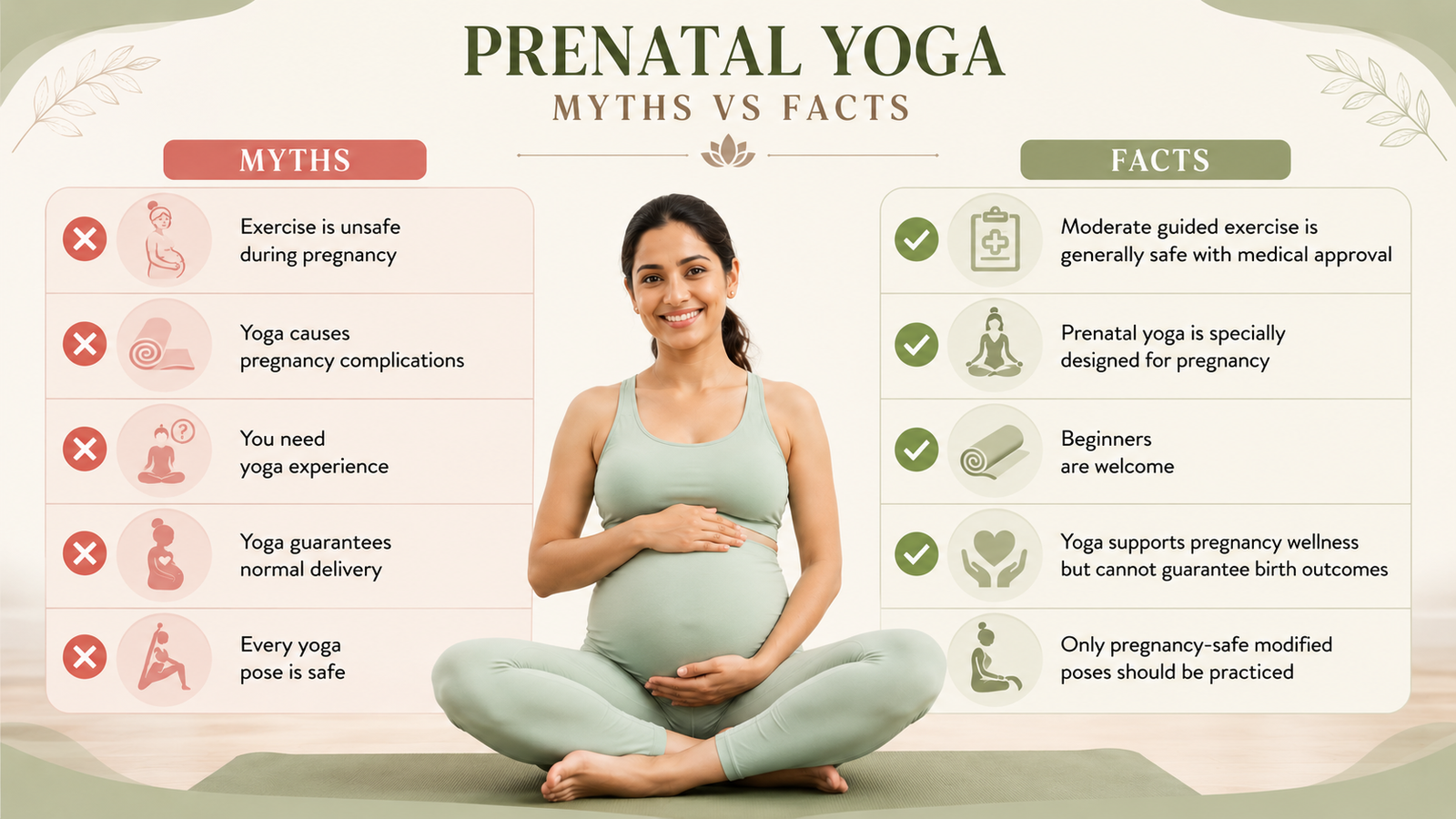
Misinformation stops many expecting mothers from exploring prenatal yoga classes. Here are the most common myths—and the facts that counter them.
Common Prenatal Yoga Myths and Facts
Myth | Fact |
Exercise is unsafe during pregnancy | Moderate, guided physical activity is generally supported by healthcare professionals for uncomplicated pregnancies. Always confirm with your provider. |
Yoga causes complications | Prenatal yoga classes are specifically designed to avoid poses unsuitable for pregnancy. When professionally guided, yoga supports—not endangers—pregnancy wellness. |
Prenatal yoga is only for experienced practitioners | Most prenatal yoga programs are designed for beginners. No prior experience is required. Classes move at a gentle pace suitable for all fitness levels. |
Yoga guarantees a normal delivery | No wellness program can guarantee specific birth outcomes. Prenatal yoga may support preparation and comfort, but it does not determine how labor unfolds. |
All yoga poses are safe during pregnancy | This is incorrect. Certain poses are avoided during pregnancy. A qualified prenatal yoga instructor will guide participants through pregnancy-appropriate movements only. |
Yoga is only physical exercise | Prenatal yoga encompasses much more than movement. It includes breathing techniques, relaxation practices, meditation, and emotional support—making it a holistic wellness practice. |
Facts Every Mom Should Know About Prenatal Yoga
What Does Prenatal Yoga Actually Involve?
Prenatal yoga is a specialized form of yoga adapted for pregnancy. It differs significantly from general yoga classes. Here is what expecting mothers can typically expect:
- Gentle, modified postures suited to each trimester
- Pranayama (breathing exercises) to build breath awareness
- Relaxation and meditation to reduce stress
- Community with other expecting mothers
- Guidance from a qualified, experienced instructor
Sessions are paced thoughtfully. The focus is on comfort, awareness, and support—not performance or intensity.
Is Prior Yoga Experience Necessary?
No. Yoga classes for pregnant women are designed to accommodate complete beginners. Qualified instructors introduce poses progressively and adapt them based on individual needs and pregnancy stage. If you have never stepped onto a mat before, prenatal yoga is still accessible to you.
Potential Benefits of Yoga Classes for Pregnant Women
Research and clinical guidance increasingly recognize the value of prenatal exercise, including yoga. The table below outlines areas where prenatal yoga may offer support.
How Prenatal Yoga May Help Expecting Mothers
Benefit Area | How Prenatal Yoga May Help |
Flexibility | Gentle stretching may support joint mobility and reduce stiffness as the body changes |
Posture | Yoga encourages postural awareness, which may help manage back discomfort during pregnancy |
Relaxation | Guided relaxation practices promote rest and a calmer nervous system |
Breathing Awareness | Pranayama builds conscious breath control, useful during labor and delivery |
Stress Management | Mindful movement and meditation may help reduce anxiety and emotional tension |
Body Awareness | Yoga helps mothers connect with their changing body in a supportive, non-judgmental space |
| Childbirth Preparation | Breathing and relaxation techniques practiced in yoga may support comfort and focus during labor |
| Overall Wellness | A consistent prenatal yoga practice supports physical and emotional health throughout pregnancy |
How Prenatal Yoga Supports Emotional Well-Being
Physical wellness during pregnancy receives considerable attention. Emotional wellness, however, is equally important—and often underaddressed.
Pregnancy brings hormonal shifts, lifestyle changes, and sometimes significant stress. Working professionals managing demanding schedules, homemakers navigating new responsibilities, and first-time mothers facing uncertainty all benefit from dedicated emotional support.
Yoga during pregnancy provides a structured space for this. Through mindful movement and breathwork, expecting mothers learn to observe their thoughts without judgment. This practice of present-moment awareness can reduce anxiety and promote a steadier emotional state.
Group prenatal yoga classes also offer community. Sharing the experience with other expecting mothers creates a sense of connection that many women find deeply reassuring.
Breathing Techniques and Childbirth Preparation
Why Are Prenatal Breathing Techniques So Important?
Breathing is central to prenatal yoga—and for good reason. Conscious breath control is one of the most practical tools an expecting mother can develop before labor begins.
Prenatal breathing techniques typically include:
- Diaphragmatic breathing: Deep belly breathing that promotes relaxation and oxygen flow
- Ujjayi breath: A rhythmic, audible breath used to build focus and calm
- Counted breathing: Structured inhalation and exhalation patterns that help regulate the nervous system
These techniques do more than support relaxation during practice. They build a functional skill. Many mothers report using breath awareness as a coping strategy during labor. Childbirth preparation through breath training is one of the most cited reasons expecting mothers seek out yoga classes for pregnant women.
When Should Pregnant Women Seek Professional Guidance?
Always. This is non-negotiable.
Before beginning any prenatal fitness program—including yoga—consult your healthcare provider. This is particularly important if you have:
- A history of pregnancy complications
- Conditions such as placenta previa or preeclampsia
- Been advised to limit physical activity
- Concerns about your current pregnancy stage
A qualified healthcare professional can advise on whether prenatal yoga is appropriate for your individual situation. Once cleared, choose a class led by an experienced prenatal yoga instructor who understands pregnancy physiology and safety considerations.
How to Choose the Right Prenatal Yoga Program
Before Joining Yoga Classes for Pregnant Women — A Practical Checklist
Use this checklist when evaluating a prenatal yoga class:
✓ Healthcare provider consulted — Have you received clearance from your doctor or midwife?
✓ Pregnancy stage considered — Does the program offer trimester-appropriate modifications?
✓ Qualified instructor verified — Is the instructor trained and experienced in prenatal yoga?
✓ Class designed for pregnancy — Is this a dedicated prenatal program, not a general yoga class?
✓ Comfort level assessed — Does the class pace and environment feel right for you?
✓ Hydration maintained — Are you able to stay hydrated throughout each session?
✓ Safety guidelines understood — Does the instructor clearly communicate what to avoid?
✓ Personal health needs discussed — Has the instructor been informed of your health history and stage of pregnancy?
A good prenatal yoga program will address all of these points before your first class begins.
Why Birth and Beyond Is a Trusted Choice for Prenatal Wellness
For expecting mothers in India looking for qualified, professional guidance, Birth and Beyond offers a well-established prenatal wellness program that combines expertise, community, and holistic support.
Birth and Beyond’s yoga classes for pregnant women are led by Diru, a Hatha and Ashtanga yoga practitioner with over 30 years of dedicated practice and teaching experience. Sessions include a thoughtful blend of asanas, pranayama, and meditation—adapted specifically for pregnancy.
Classes are available both online and in-person, with locations in Chandigarh and Panchkula. This flexibility makes Birth and Beyond accessible to working professionals, homemakers, and mothers who need options that fit their schedules.
Class timings:
Chandigarh:
- Pre-Natal: Tuesday, Thursday, Saturday — 10:30 AM to 11:30 AM
- Pre-Natal: Monday to Friday — 6:00 PM to 7:00 PM
Panchkula:
- Pre-Natal: Monday to Friday — 11:00 AM to 12:00 PM
Beyond yoga instruction, Birth and Beyond’s prenatal wellness programs emphasize holistic pregnancy preparation—supporting mothers physically, emotionally, and practically as they move toward childbirth.
Birth and Beyond also offers a complimentary first session, giving expecting mothers the opportunity to experience the program firsthand before committing. Contact Birth and Beyond to learn more about class schedules, registration, and personalized guidance.
Safety Considerations Before Starting Prenatal Yoga
Safety is the foundation of any good prenatal yoga program. Here are key points every expecting mother should keep in mind:
- Medical clearance comes first. Always consult your healthcare provider before starting.
- Not all poses are appropriate. A qualified instructor will guide you away from movements unsuitable during pregnancy.
- Listen to your body. Discomfort is a signal. Communicate with your instructor.
- Avoid hot yoga. Elevated body temperature during pregnancy requires careful management.
- Stay hydrated. Bring water to every session.
- Inform your instructor. Share your trimester, health history, and any concerns before class begins.
A professionally guided prenatal yoga class will have clear safety protocols in place. If a class does not address these considerations, seek a different program.
Start Your Prenatal Wellness Journey with Confidence
Pregnancy is a time of profound change. The decisions you make about your wellness during this period matter—not just for you, but for your growing baby.
Yoga classes for pregnant women, when professionally guided and medically approved, offer a meaningful way to stay active, manage stress, and prepare for childbirth. The myths are understandable. But the facts are clear: prenatal yoga is a gentle, purposeful practice designed with the expecting mother in mind.
If you are ready to take the next step, explore the maternity yoga classes and pregnancy wellness programs at Birth and Beyond. Connect with their team today to ask about schedules, class suitability, and your complimentary first session. Your pregnancy wellness journey deserves expert guidance—and genuine support.
Connect with Birth and Beyond Today → birthnbeyond.co.in/yoga-for-all
Frequently Asked Questions (FAQs)
When can I start prenatal yoga during pregnancy?
Many expecting mothers begin prenatal yoga in their first trimester, once cleared by their healthcare provider. Others start later in pregnancy. The right time depends on your individual health, pregnancy stage, and medical advice. Always consult your doctor or midwife before beginning any new prenatal fitness or wellness program.
Are Yoga Classes for Pregnant Women suitable for beginners?
Yes. Yoga Classes for Pregnant Women are specifically designed to welcome all experience levels, including complete beginners. Qualified instructors guide participants through pregnancy-appropriate movements at a gentle pace. No prior yoga experience is needed. Classes at Birth and Beyond are structured to support expecting mothers at every stage of their pregnancy journey.
Can prenatal yoga replace medical care during pregnancy?
No. Prenatal yoga is a wellness and fitness practice—not a medical treatment. It is not a substitute for regular antenatal care, medical check-ups, or professional healthcare advice. Prenatal yoga is best understood as a complementary practice that supports physical and emotional well-being alongside proper medical supervision throughout pregnancy.
How do I choose a safe prenatal yoga program?
Look for a program led by a qualified instructor with specific experience in prenatal yoga. Confirm that the class is designed for pregnancy—not a general yoga class with modifications. Ensure the instructor asks about your health history and trimester. Consult your healthcare provider before enrolling, and choose a program that clearly prioritizes safety and individual comfort.